Measurement & Strategy
Why Branded Search Is The Early Warning Signal SEO Teams Ignore
Why branded search is one of the cleanest early warning signals for organic growth — and how to segment in time to see it.

Most e-commerce teams look at total organic traffic and stop there. It is a tidy number. It is also incomplete.
When I segment Google Search Console by branded versus non-branded queries, I am not looking for a prettier dashboard. I am trying to see whether organic visibility is being driven by actual demand, or by brand momentum the business barely notices until it starts fading.
That distinction matters. A site can look healthy while depending heavily on branded searches for most of its clicks. When branded demand weakens, organic performance usually follows. Search rarely fails gracefully.
Why total organic traffic lies by omission
Blended organic traffic hides the structure underneath it.
It tells you clicks are coming in, but not whether they are driven by new demand, existing brand demand, or a mix of both. That makes it very easy to mistake volume for resilience. Dashboards love that trick.
A rising line can mean your content is doing well. It can also mean brand spend is carrying more of the channel than leadership realises. Same graph. Very different story.
In one audit for a large Swedish e-commerce brand, the split below showed how dependent the organic channel had become on branded demand.
Figure 1: The hidden structure of organic visibility
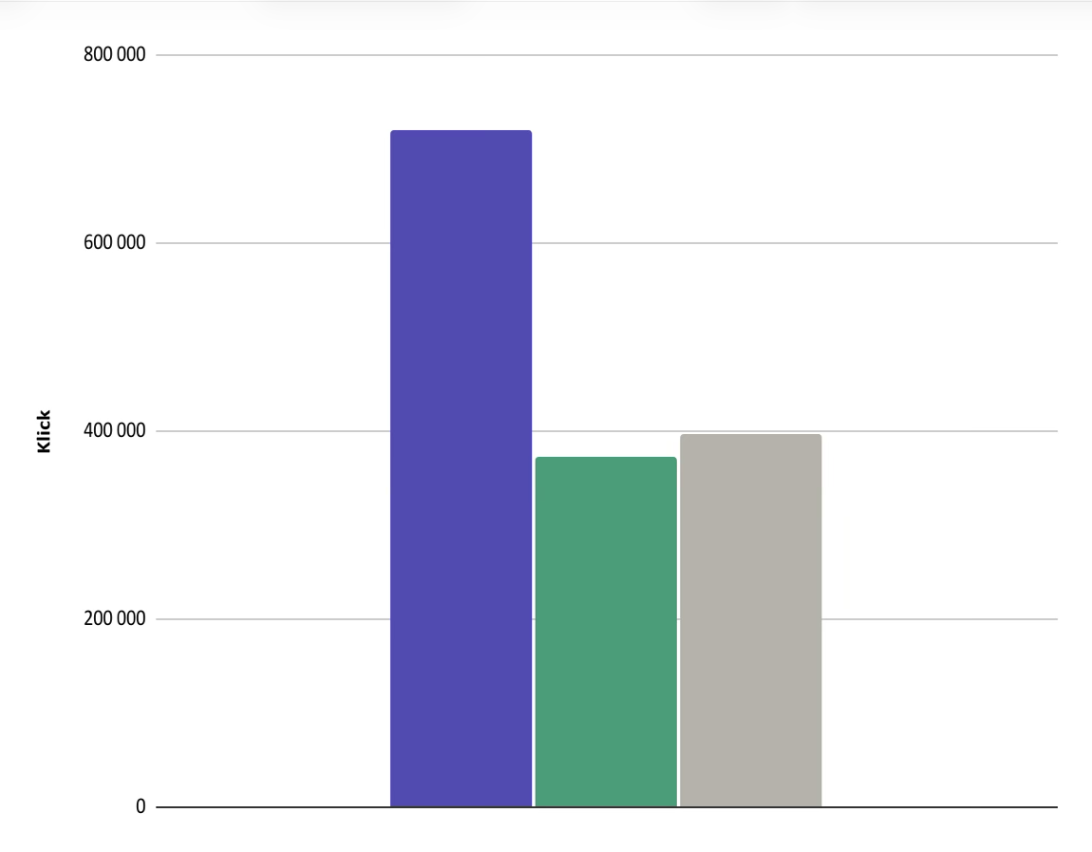
- Branded search (dark blue): 48.4%
- Non-branded search (green): 25%
- Anonymous queries (grey): 26.6%
In practice, this creates a fragile setup. Paid helps create branded demand, branded demand supports organic clicks, and when budget gets cut the decline often shows up in both channels at once. Convenient for the business. Less convenient for the slide deck.
Branded search is a demand signal
Branded search is a live signal of whether the market is actively looking for you.
When branded demand rises, organic traffic usually rises with it. When branded demand weakens, organic visibility often weakens too. That does not mean SEO failed. It means the demand engine upstream of SEO changed.
SEO captures demand. It does not create it in isolation. That is why SEO and brand should be in the same room, not in separate meetings pretending they are independent.
Strong brands can still be fragile
This is where the nuance matters.
A brand can look strong in organic search while remaining fragile underneath. That happens when branded queries carry too much of the total and non-branded demand is weak.
The risk becomes obvious when paid budget changes. If paid spend helps create and sustain branded demand, then a cut can flatten branded search and drag organic visibility down with it.
People often say “SEO dropped.” That is the neat version.
What really dropped was the demand structure SEO was standing on.
Why this matters more in 2026
This matters more in 2026 because many e-commerce brands are already operating under budget pressure, and small demand shifts now have larger commercial consequences.
When marketing budgets tighten, paid is often cut first. That does not just reduce paid efficiency. If paid spend is helping create branded demand, it also weakens the search demand organic visibility depends on.
I saw this in-house. As marketing budgets were cut, branded search fell sharply over time.
Over 48 months, branded searches dropped by roughly 60%, and that decline translated into double-digit millions in SEK revenue lost. The business did not just lose paid performance. It lost demand upstream, and organic traffic followed.
That is the real risk: the same budget pressure that reduces paid revenue now can also reduce organic revenue later.
By the time leadership sees the traffic decline, the damage is already spread across multiple channels.
The better question is no longer, “How much traffic did we get?”
It is: “How much revenue is being carried by brand demand we still control?”
Related reading:
What the best teams do
The best teams do not treat branded search as a vanity metric.
They:
- segment branded and non-branded clicks
- compare trends over time
- validate the pattern against paid spend and campaign timing
- watch for divergence before it becomes visible in total traffic
That is the real advantage. Earlier judgment. Fewer heroic explanations later.
The operating truth
The deeper problem is ownership.
SEO reports on the demand curve. Paid creates part of it. Content supports it. Brand shapes it. But in many organisations, no one owns the full system.
That is why organic visibility can look stable right up until it stops being stable.
If nobody owns demand architecture, the dashboard becomes a delayed alarm. By then, the expensive part has already happened.
TL;DR
Branded search is one of the cleanest early warning signals in SEO because it tells you whether the business still has demand worth capturing.
Total organic traffic can flatter a weak system. Branded search usually cannot.
If branded demand is carrying too much of your visibility, then your organic performance is more dependent on brand strength than it looks. And if paid spend is what keeps that demand alive, SEO is more exposed to budget shifts than leadership usually wants to admit.
Read also:
- Agentic Commerce Is Already Here — And It's Already Exposing Structural Weakness
- Why you shouldn't rebuild your SEO-strategy for AI